Health & Wellness Blog – MV Krishna Reddy Memorial Hospital
Apr 15, 2026
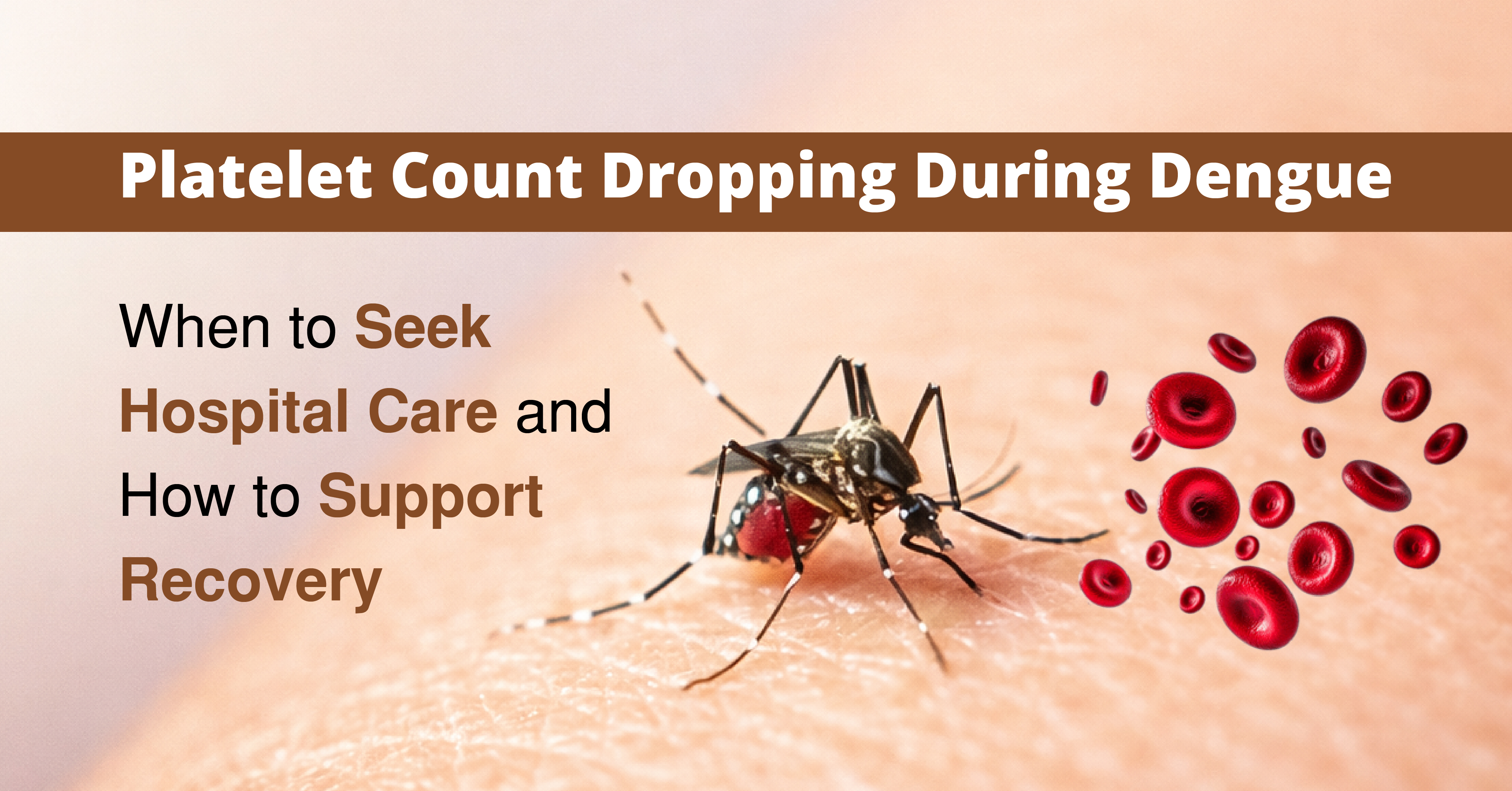
Platelet Count Dropping During Dengue: When to Seek Hospital Care and How to Support Recovery
A falling platelet count is one of the most concerning developments during dengue infection. While mild platelet reduction is common, a rapid or continuous drop in platelet count during dengue may increase the risk of bleeding and other complications. Knowing when hospital care is essential and how recovery can be safely supported plays a crucial role in patient outcomes.
This article explains why platelets fall in dengue, warning signs that require hospital admission, and evidence-based ways to support recovery under medical supervision.
Understanding Dengue and Platelet Count Reduction
Dengue is a viral infection transmitted by Aedes mosquitoes. One of its hallmark laboratory findings is thrombocytopenia, or low platelet count.
Platelets are essential for:
- Blood clotting
- Preventing internal and external bleeding
- Supporting blood vessel integrity
In dengue, platelet levels often begin to fall between day 3 and day 7 of illness, coinciding with the critical phase.
Why Platelet Count Drops During Dengue
The fall in platelet count during dengue occurs due to multiple mechanisms acting together.
Bone Marrow Suppression
The dengue virus temporarily suppresses bone marrow activity, reducing platelet production.
Increased Platelet Destruction
Immune responses and viral activity increase platelet breakdown in circulation.
Capillary Leakage
Damage to blood vessel lining causes plasma leakage, affecting platelet concentration and function.
This combination explains why platelet levels can drop suddenly, even when fever begins to settle.
Signs That Platelet Count Is Falling to Dangerous Levels
Not all patients with low platelets develop complications. However, certain symptoms suggest increased risk.
Warning Symptoms to Watch For
- Bleeding gums or nosebleeds
- Red or purple spots on the skin (petechiae)
- Blood in urine or stools
- Persistent vomiting
- Severe abdominal pain
- Extreme fatigue or dizziness
These signs require immediate medical evaluation.
When to Seek Hospital Care for Low Platelets in Dengue
Hospital care becomes essential when platelet levels fall rapidly or symptoms worsen.
Hospital Care Is Required If
- Platelet count falls below clinically safe thresholds
- There is active bleeding
- The patient shows signs of dehydration or shock
- There is severe abdominal pain or altered consciousness
- Daily platelet monitoring is not feasible at home
Hospitals provide close monitoring, intravenous fluids, and supportive care to prevent complications.
Dengue Platelet Monitoring – Why Timing Matters
Platelet counts can fluctuate during the day due to hydration levels, body rhythms, and laboratory timing.
Best practices include:
- Testing at the same time each day
- Monitoring trends rather than single values
- Combining platelet count with clinical symptoms
Medical decisions are based on overall clinical condition, not platelet numbers alone.
Supporting Platelet Recovery During Dengue
Platelet recovery occurs naturally as the infection resolves, usually after the critical phase.
Medical and Supportive Measures
- Adequate oral or intravenous hydration
- Balanced nutrition
- Rest and avoidance of physical strain
- Avoiding medications that increase bleeding risk
Role of Carica Papaya Leaf Extract Tablets and Syrup for Platelet Increase During Dengue
Carica papaya leaf extract tablets and Carica papaya leaf extract syrup have been studied for their supportive role in platelet increase during dengue-associated thrombocytopenia. These formulations are commonly used as adjuncts to standard medical care to help support platelet recovery trends during the dengue recovery phase.
It is important to note:
- Carica papaya leaf extract tablets and syrup for platelet increase do not replace hospital treatment
- They do not prevent dengue-related complications on their own
- Use should always be under medical guidance, especially during the critical phase
- Supportive therapies work best when combined with regular dengue platelet monitoring and professional care
Dengue Care at Home – When Is It Appropriate?
Home care may be suitable for stable patients without warning signs.
Home Care Is Possible If
- Platelet levels are stable
- There is no bleeding
- Hydration is adequate
- Daily follow-up is possible
Patients should return to hospital immediately if symptoms worsen.
Frequently Asked Questions (FAQs)
How fast can platelet count drop during dengue?
Platelet levels can decline rapidly over 24–48 hours, especially during the critical phase. This is why daily monitoring is essential.
Does a low platelet count always mean bleeding?
No. Many patients have low platelet counts without bleeding. Clinical symptoms are equally important.
Can platelets recover without transfusion?
Yes. Most dengue patients recover platelet levels naturally as the infection resolves. Transfusions are reserved for specific situations.
Is papaya leaf extract safe during dengue?
When used appropriately and under medical advice, it is generally considered supportive, but it should never replace medical monitoring.
When does platelet count start increasing again?
Platelet recovery usually begins after the critical phase, often around day 7–10 of illness.
Key Takeaways
- Platelet count dropping during dengue is common but requires monitoring
- Rapid decline or bleeding symptoms need hospital care
- Platelet trends matter more than single readings
- Supportive care aids natural recovery
- Medical supervision is essential throughout dengue illness
Conclusion
A dropping platelet count during dengue can be alarming, but timely recognition and appropriate care significantly reduce risks. Understanding warning signs, maintaining regular monitoring, and knowing when hospital care is necessary are central to safe recovery. Hospitals such as MVKR Memorial Hospital play a vital role in managing dengue complications through continuous assessment and supportive treatment.
Early medical attention, combined with responsible home care when appropriate, ensures better outcomes and a smoother recovery process.
This article is for educational purposes only and does not substitute professional medical advice, diagnosis, or treatment.
More from Blog

Jun 01, 2026

Mar 17, 2026

Feb 15, 2026

Feb 06, 2026

Jan 28, 2026